Compensating for change in a shifting CMM environment

3 Mins
Published in CMM’s
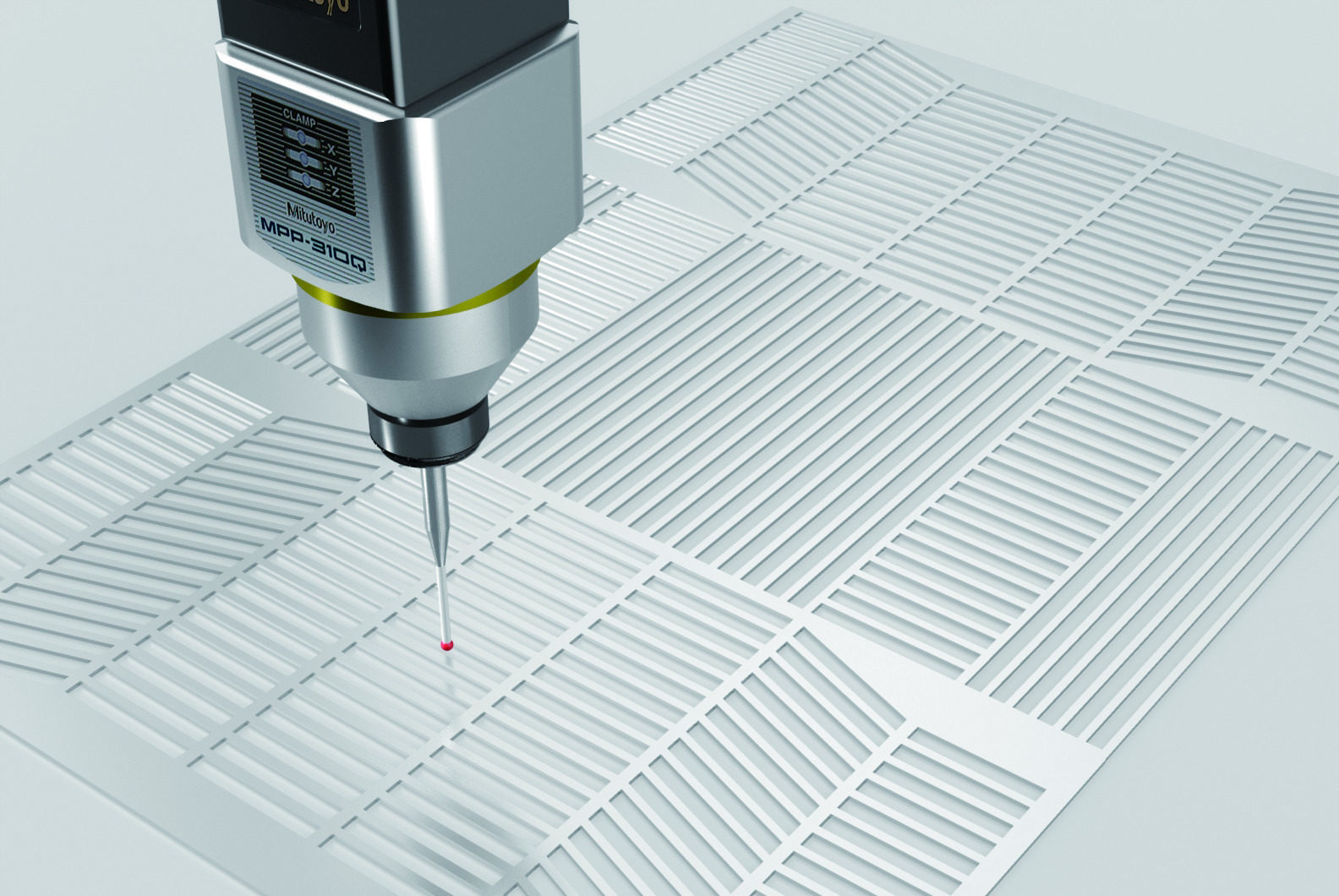
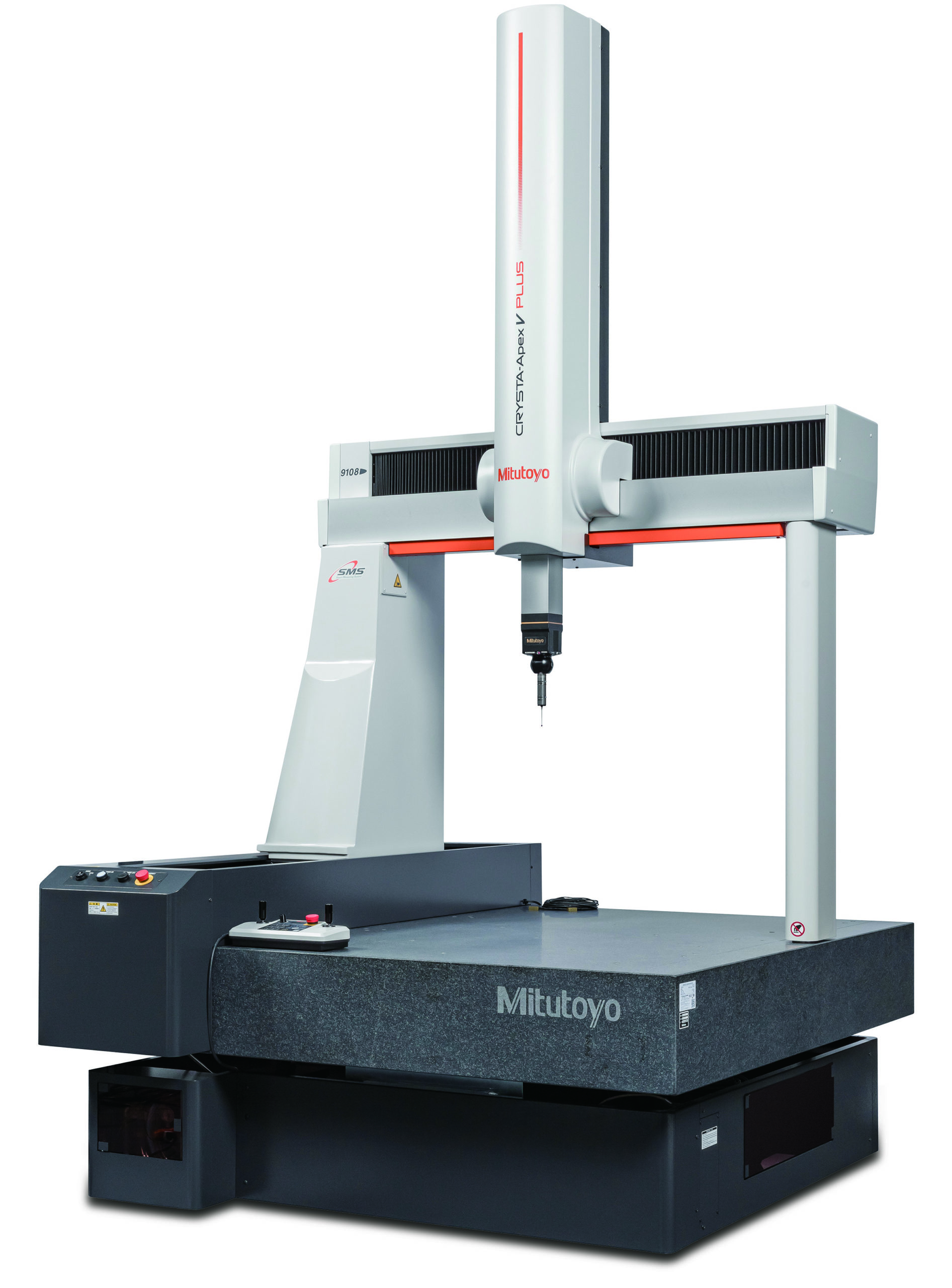
As manufacturers continue to seek faster feedback and tighter quality control, demand is rising for co-ordinate measuring machines (CMMs) capable of maintaining accuracy in shop-floor environments. For Mitutoyo, this shifting industry mindset provided the impetus for its new Crysta V-PLUS CMM, a machine engineered to guarantee accuracy across fluctuating temperatures common of production areas.
“The design of the standard bridge-type CMM is well established,” says Andy Fifield, CMM Product Manager at Mitutoyo UK. “So, as a leader in this area, it was about identifying what we could further improve to create genuine advantages for customers.”
Lineside measurement
Rather than focusing solely on software or multi-sensor capability, both already highly advanced, Mitutoyo revisited the hardware platform itself. The driver was clear: manufacturing companies increasingly want reliable lineside inspection.
Explains Andy: “Without lineside measurement, you might produce 50 parts, take them to the inspection room and discover all 50 are out of specification. That’s expensive scrap. Transferring the CMM to the shop floor is the answer, but only if you can guarantee micron-level performance in the temperatures typical of that environment.”
Historically, Mitutoyo CMM accuracy specifications covered temperature bands such as 18-22°C and, more recently, 16-24°C. However, warmer summers compounded by heat from busy workshops, render those limits a little restrictive. The Crysta V-PLUS addresses the issue by guaranteeing accuracy across a far wider 15-30°C range, enabling confident shop-floor measurement. The new platform replaces the company’s previous-generation Crysta V series.
“The best just got better,” states Andy.
Dual-aspect sensors
Stable performance in fluctuating temperatures demands more than robust mechanics. The Crysta V-PLUS combines a granite base for thermal stability with a precision aluminium frame engineered for smooth and fast motion. Embedded error mapping supports precision measurement combined with high acceleration, while temperature sensors on each axis continuously monitor machine conditions. A second layer of sensing measures workpiece temperature in real time.
“Having temperature sensors on each axis and applying the thermal coefficient of expansion for the material being measured is critical in allowing the Crysta V-PLUS to compensate measurements accordingly,” he says. “This is something not all CMM manufacturers can offer.”
Energy efficiency also features in the redesign. CMMs typically rely on air bearings for frictionless motion, yet many machines continue consuming compressed air when idle. The V-PLUS introduces an air reduction feature that cuts supply during inactivity while keeping the machine in a ready state for immediate restart.
Wide appeal
The Crysta V-PLUS suits both inspection rooms and shop-floor installations, particularly in sectors subject to stringent regulation or where failure carries costly consequences (aerospace, medical, automotive, oil and gas). However, its appeal is broad.
“Capturing a defect early in the production process is a huge cost saving,” says Andy. “We all know inspection is an overhead, so while I can’t promise you’ll make 300 extra parts a day because of the CMM’s speed, we can ensure those 300 parts are within specification and avoid expensive scrap.”
Visitors to MACH 2026 (NEC Birmingham, 20-24 April) can see the Crysta V-PLUS performing live measurement demonstrations on the Mitutoyo stand (19-530). It will be the machine’s first UK exhibition appearance.
Automatic programming
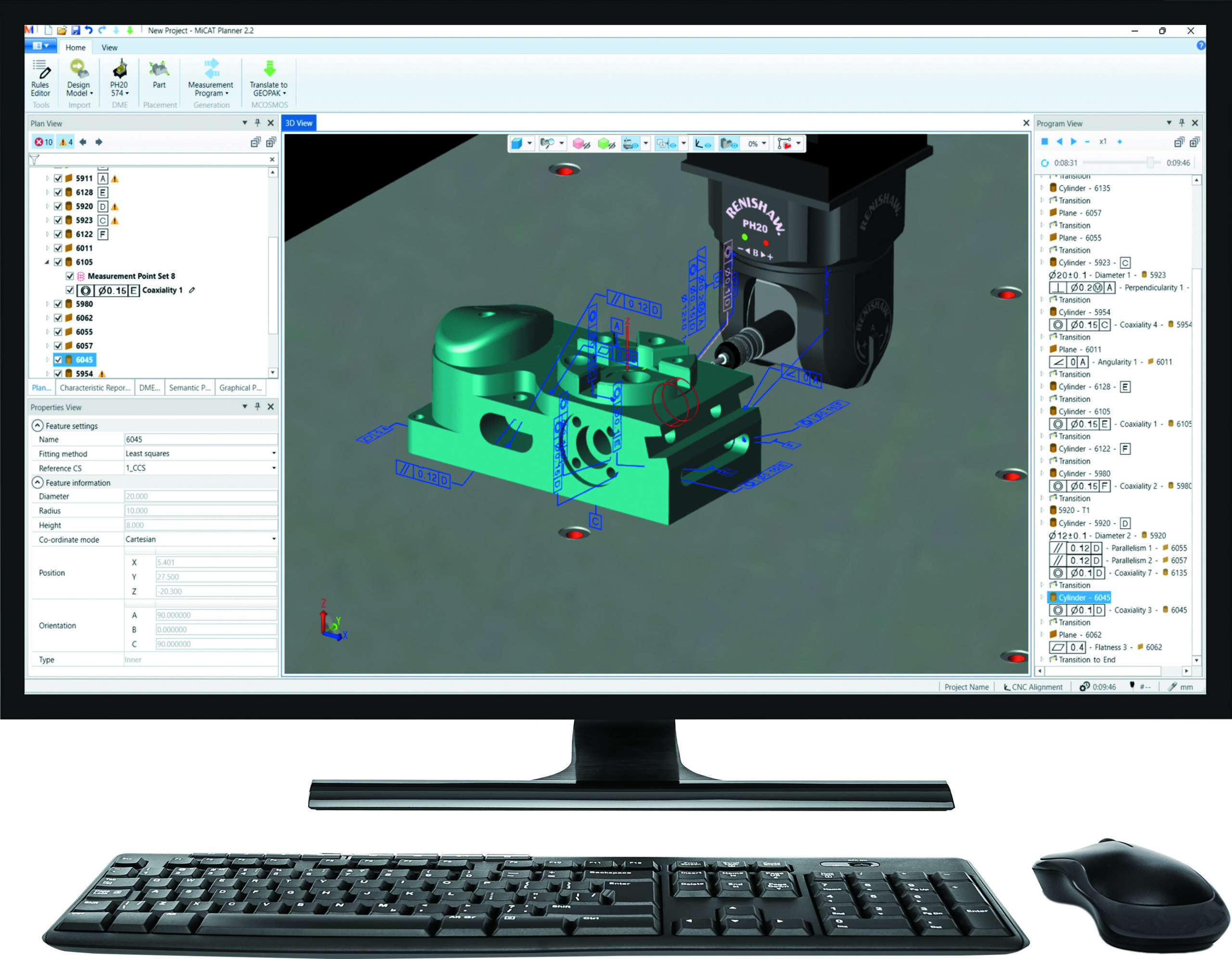
Complementing the hardware is Mitutoyo’s MiCAT Planner software, a key enabler in streamlining inspection workflows. MiCAT Planner builds on Mitutoyo’s established MCOSMOS platform but addresses a long-standing industry challenge: manual program creation.
Traditionally, CMM programmers use a CAD model and 2D drawing, interpreting dimensional and geometric tolerances to construct a measurement routine manually. MiCAT Planner changes that strategy by automatically generating inspection programs that MCOSMOS can execute.
The software leverages PMI (Product Manufacturing Information) or MBD (model-based definition) data embedded within the CAD model. Embedding this information is aided by Mitutoyo’s introduction of a special wizard, supporting up to 50% faster inspection program creation.
Coupled with digital twin models of Mitutoyo CMM hardware and configurable rules templates (defining sampling strategies or probing methods for example), the system enables near “one-button” program generation.
“The overhead on the metrology department now drops to perhaps 5% or 10% of what it once was,” says Andy. “Quality professionals can instead focus on more critical tasks like ensuring a robust system and validating programs, rather than simply generating a report.”
Together, Mitutoyo’s Crysta V-PLUS CMM and MiCAT Planner software reflect a clear direction of travel: accurate lineside component measurement, quicker feedback, lower energy consumption and faster programming. A reliable, confident way to facilitate shop-floor inspection is finally here.
Want to know more about this article?
Ask us below...