Desktop digital microscopy: A vision of the future, today

4 Mins
Published in Microscopes
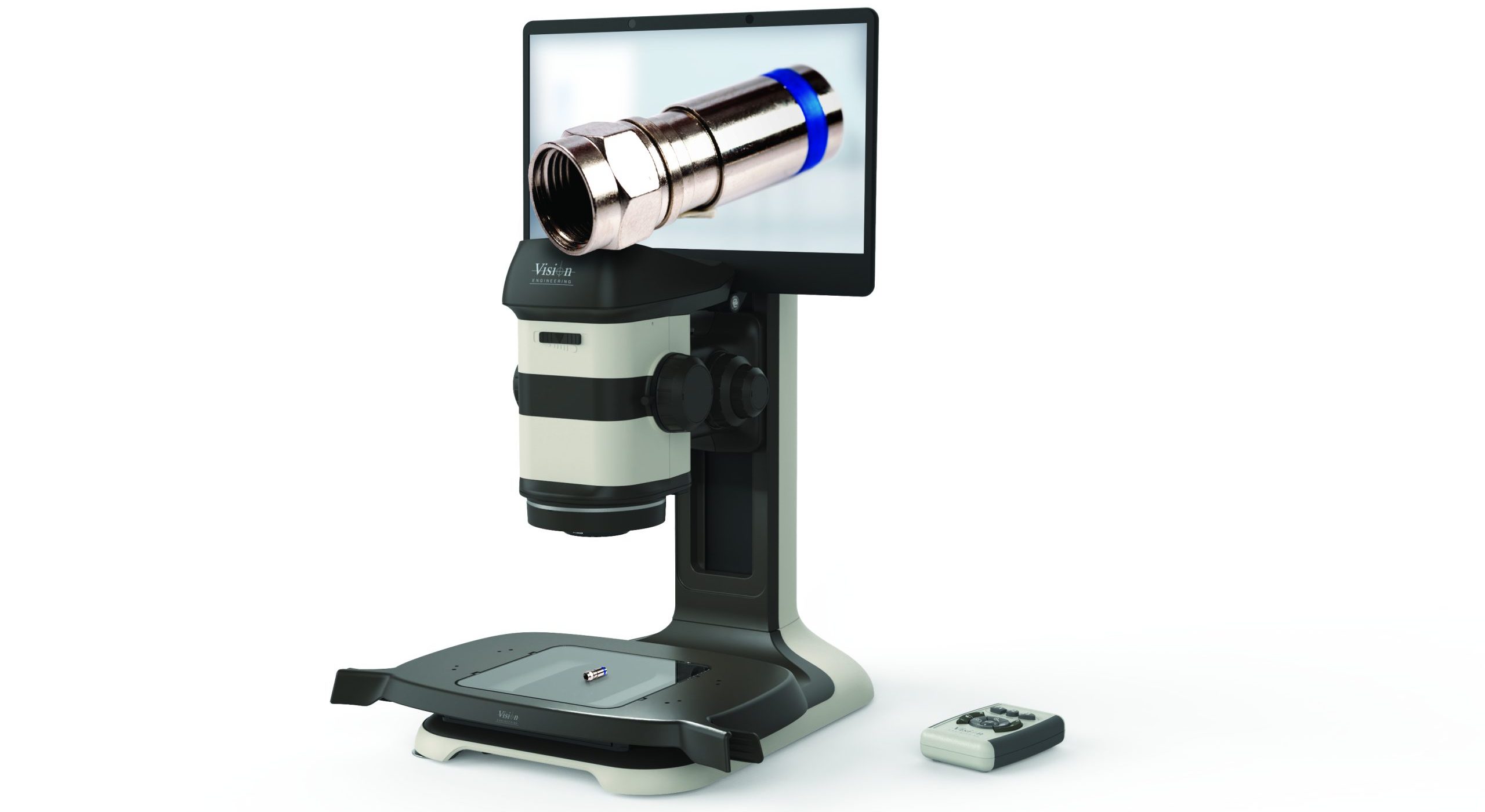
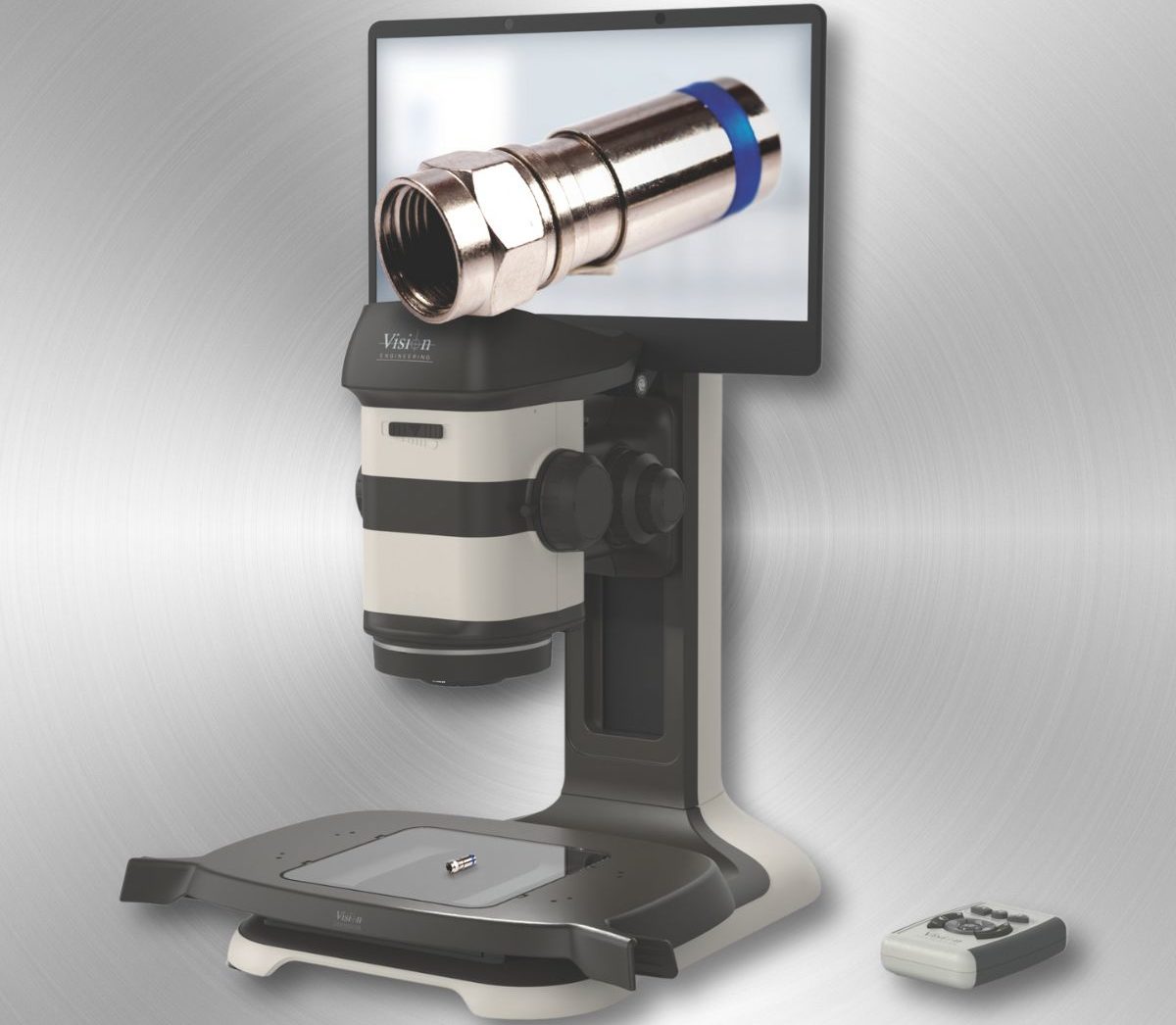
True 3D inspection presents a number of key advantages to quality professionals. First are the problem-solving capabilities that arrive from greater visual acuity, with 3D images yielding more information than is possible to gather from a 2D counterpart. However, what if the technology could go a step further, introducing enablement through connectivity? The potential savings in time and money that would come from sharing 3D images along the supply chain are potentially game-changing for both part verification and time-to-market. Metrology expert Vision Engineering says it has overcome this particular challenge with the company’s new ProteQ VISO digital stereo microscope.
“Like all technological breakthroughs, getting the most from ProteQ VISO requires a different thought process; a new mindset,” suggests Stephen Sanderson, Group Product Manager at Vision Engineering. “Manufacturers and prototyping shops are familiar with shipping sample components back and forth or driving between sites for in-depth discussions about issues or improvements. But now we have a quite different way of working, where it becomes possible to save several days per component – potentially more in cases where sites are in different countries.”
Seeing is believing
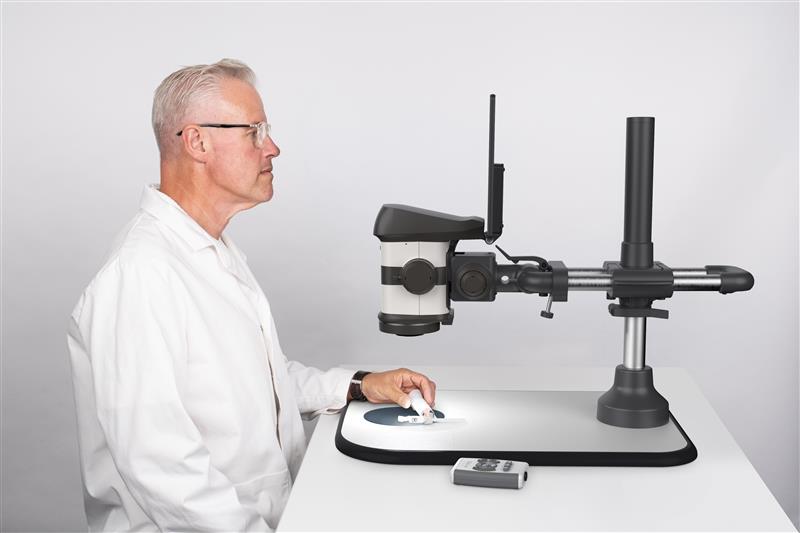
So how does it work? Well, mechanically speaking the ProteQ VISO features a fully integrated ‘autostereo’ display, enabling true flatscreen 3D image viewing. This 3D LED display does not require traditional eyepieces, special glasses or any other tools. Twin cameras located in the monitor control eye-tracking software to ensure the user receives perfectly clear 3D images, while enabling complete freedom of head movement.
In short, the microscope’s stereo image capabilities enhance depth perception, allowing intuitive 3D interaction during inspection and prototyping.
Stephen continues: “We live in a 3D world where we make 3D things. If we can see depth, we negate the need for certain measurements as perceptions like high/low come naturally. Autostereo technology is also great for component texture. You can see defects like burrs and tooling marks far more clearly and eliminate the ambiguity that comes with wondering if the issue relates to surface structure, shape or discoloration.”
The integrated autostereo display delivers a really compact footprint in an era when space is at a premium. The ProteQ VISO is significantly smaller (and lower in price) than Vision Engineering’s existing DRV digital 3D inspection system.
The power of connectivity
With ProteQ VISO, users are able to connect and stream 3D images or video as required, taking the opportunity presented by this technology to a whole new level. If preferable in certain collaborations, operatives have the option of switching to mono viewing.
“When a subcontractor makes a first-off component and sends it to the customer for approval, it could take several days,” he explains. “It might even get damaged or lost in transit. Now, however, it becomes possible to share the digital image with the customer in real time, who can perceive it in 3D. By viewing a first-off in seconds, not days, engineers can resolve issues faster and shorten validation times. You essentially create a fully collaborative supply chain involving colleagues, customers, suppliers and other project stakeholders. You can even record the 3D view for subsequent playback, if required.”
Although connected manufacturing is not new, the difference here is recognising the ability to share 3D images effortlessly across platforms and how it moves the opportunity forward. Live image streaming without lag (network dependent) provides extensive time saving, eliminating the need for postal services or travel, supporting fast and cost-effective decision making.
Unique in the market
As far as Vision Engineering is aware, no other system of this type is currently able to live-share 3D images and video. Obvious beneficiaries are manufacturers with employees across multiple sites or dispersed areas. Many manufacturers today have their headquarters and R&D facilities in Europe or North America but make parts elsewhere in the world. Travel times can be substantial.
It’s also about reducing risk for companies that make high-value or sensitive goods, while training facilities and educational establishments are among others set to take advantage, where connected systems enhance the experience for both trainers and learners.
“A key concept is the empowerment that arrives through digital collaboration and connectivity, with the ProteQ VISO introducing a suite of useful digital features for modern technical teams,” says Stephen.
Picture-in-picture and overlay capabilities are key, where users can reference views alongside live images with overlay support and preset saving. Operators can also benefit from annotation and dimensioning tools to add notes, measure features and streamline reports in-process. What’s more, users are able to access emails, Microsoft Teams and other files directly from the interface, while the system additionally provides compatibility with external software, such as Vision Engineering’s Dimension Two inspection and measurement software.
Immersive experience
Importantly, the immersive experience of 3D images comes with less visual fatigue. The upright viewing position, adjustable screen and eye-point comfort ensure ergonomic microscopy, minimising fatigue and maximising productivity over extended sessions. Combined with live magnification indication and 10:1 zoom, users can work with precision and ease.
“Operators of ProteQ VISO needn’t be microscope experts,” says Stephen. “They can select presets of favourite configurations without trawling through endless menus. Of course, expert features are available if required, perhaps to exert more control over factors like gain or exposure, for example.”
Whether for advanced inspection labs, new product development/prototyping facilities, machine shops, manufacturing plants or training establishments, there’s little doubt that ProteQ VISO offers a leap forward in collaborative efficiency, digital versatility and user comfort compared with 2D systems. The ability to capture, stream and record live 3D images – and gain instant feedback -expedites the entire quality process.
“This is the next generation of ergonomic desktop digital microscopy, empowering quality teams to work faster and collaborate smarter, all while experiencing true stereo clarity on-screen,” he concludes. “It holds the potential to redefine both inspection and design workflows.”
Want to know more about this article?
Ask us below...