Flir MIX signals new era of multispectral imaging capabilities at AITA Conference

4 Mins
Published in Events
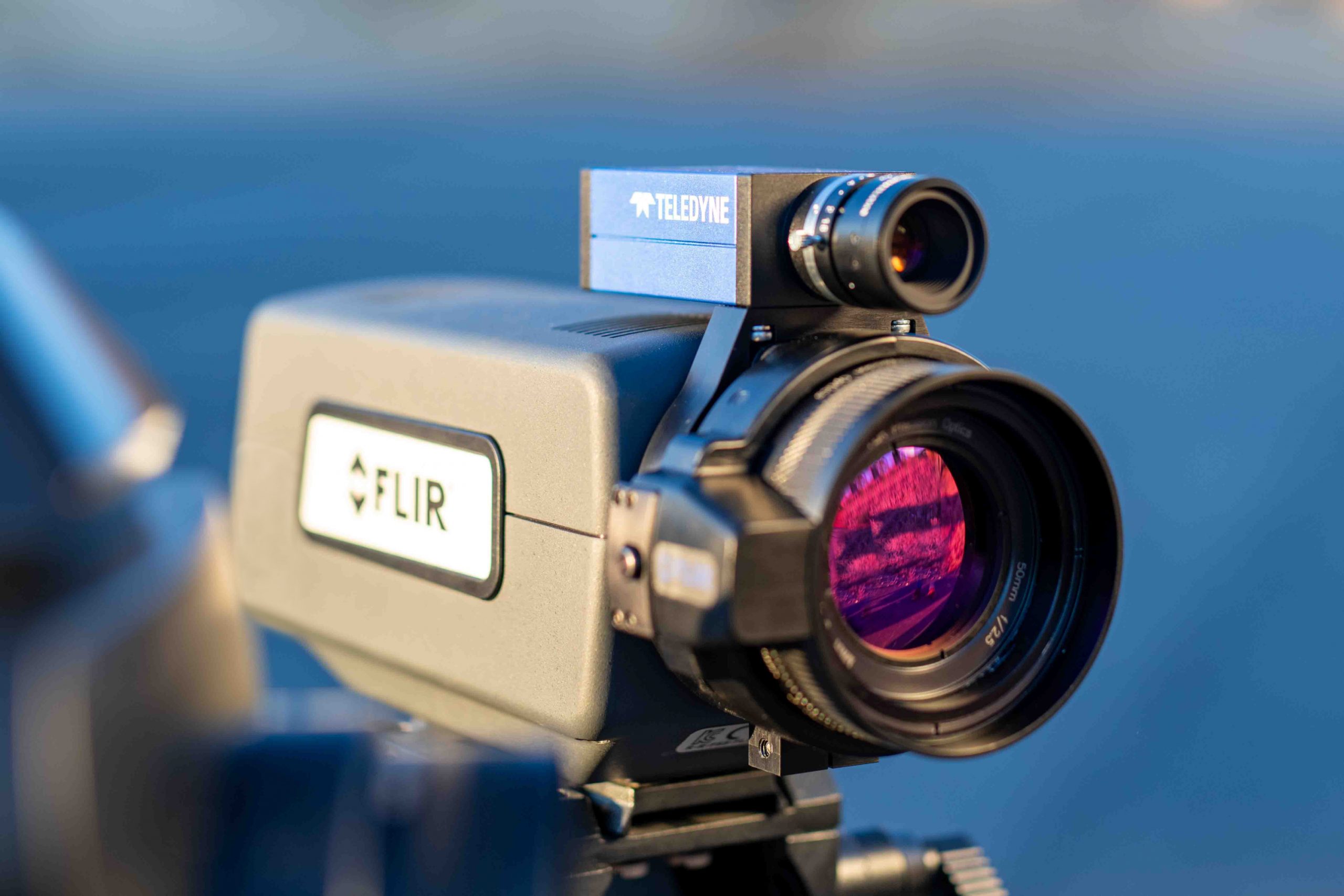
The recent AITA (Advanced Infrared Technology & Applications) Conference in Kobe, Japan, saw Flir showcase its latest breakthrough in multispectral infrared imaging.
The Flir MIX (Multispectral Imaging Xperience) synchronises both high-speed thermal and visible light imagery providing the engineering and science community with the clearest, most insightful view of complex thermal events ever witnessed. While suitable for a whole host of different applications, at the AITA Conference, Flir explained how MIX is able to enhance the capabilities and potential of non-destructive testing (NDT).
Flir has a long and successful track record of empowering researchers with tools which not only capture data but help create new knowledge in the pursuit of scientific progress. Flir MIX is the latest example, a device that simplifies workflows and reduces research time so engineers, scientists and researchers can focus on what truly matters: discovery and impact.
AITA Conference delegates were eager to hear about the benefits provided by Flir MIX, the first device to capture high-speed visible light and the revealing power of infrared synchronously. Users can see both structure and transformation at the same time, in real time, without any need to piece together separate datasets.
An experienced team of Flir professionals from Japan, the US and Australia were on-hand to deliver a keynote presentation entitled: Accelerating Discoveries Through Effortless Fusing of High-Quality Thermal and Visual Imagery.
Two data types
During NDT, engineers and researchers have historically encountered the dilemma of choosing between the use of visible-light data or thermal data. Although visible-light imaging offers structural and contextual insights, thermal data discloses heat signatures and patterns.
The effort to capture both types of data and manually align them spatially – or even more daunting, synchronize them temporally – has shown to be inconsistent and labor-intensive, typically resulting in more questions than answers.
With Flir MIX, users gain from a significant advancement in multispectral imaging that is capable of seamlessly combining high-quality thermal and visual imagery into a unified, synchronized dataset. This cutting-edge system addresses the long-standing compromise by incorporating sophisticated dual-sensor technology into a single, cohesive unit.
The outcome is an efficient, real-time solution that alleviates the need for manual alignment and post-processing, guaranteeing that each captured frame accurately portrays both detailed thermal characteristics and vibrant visible contexts. In this manner, the integration of high-quality thermal and visual imagery not only elevates data interpretation standards but also accelerates discoveries.
Integrated architecture
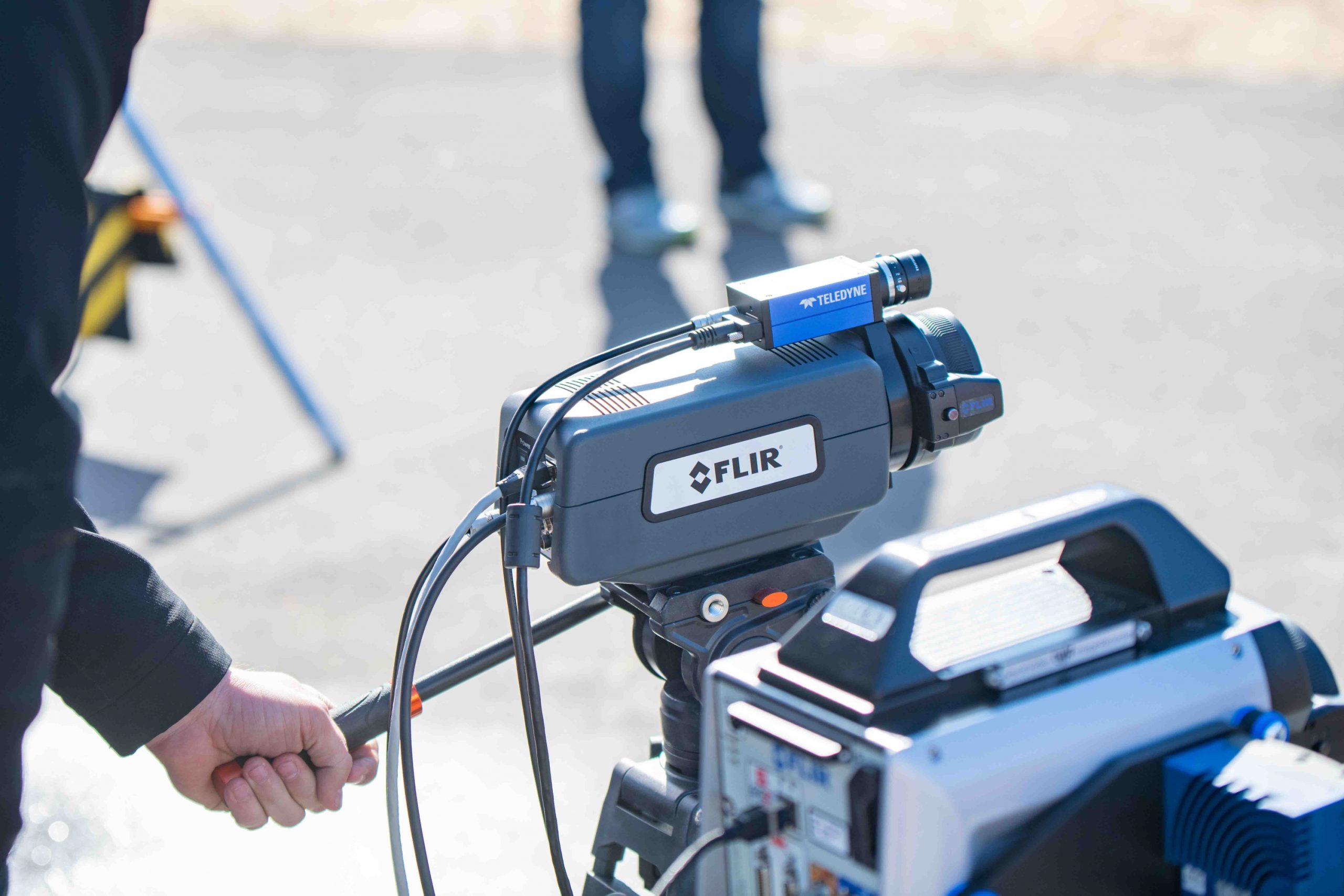
The integrated imaging architecture at the core of Flir MIX can record events at speeds up to 1,000 frames per second. This rapid performance is essential for documenting transient thermal events – including NDT processes like material stress testing – while maintaining spatial accuracy. The concurrent capture of thermal and visible data enables users to gain deeper insight into processes that change rapidly over time, minimizing analysis cycles and improving the accuracy of quantitative measurements.
Catering to a wide range of applications, the system is available in various kit configurations. For instance, the X-Series Starter Kit is specifically designed for high-speed research settings. It integrates a Flir X69xx series thermal camera with rapid visible cameras, precision optics, and bespoke mounting hardware to suit challenging applications like aerospace testing and industrial diagnostics.
The A-Series Starter Kit presents a flexible solution for industries such as electronics, renewable energy and battery testing, where compatibility with Flir A67xx series thermal cameras guarantees the acquisition of both detailed thermal data and high-quality visual information.
For those who want to take advantage of post-processing adaptability, the Flir MIX Toolkit offers an additional option. In conjunction with Flir Research Studio software 2025, Flir MIX Toolkit provides a complete solution that streamlines user workflows from data capture to analysis.
Ultimately, this two-in-one platform automates synchronisation and delivers user-friendly data management and real-time analysis features that significantly shorten the interval between data collection and actionable insights. With its precise pixel overlays and synchronised imagery, the system allows users to concentrate on interpreting findings and expediting discoveries, free from the limitations posed by conventional imaging systems.
Clarity and speed
With its thorough view of rapidly changing thermal phenomena and ability to enhance the quality and dependability of multispectral data, users benefit from detailed, real-time, combined datasets. Flir MIX promotes a deeper understanding of dynamic processes, propelling advancements in fields that include defence, materials science and renewable energy.
This transformative change in infrared and multispectral imaging provides a quantitatively enhanced option compared with traditional imaging processes. By synchronising thermal and visual data at high speeds with pixel-level spatial precision, the system can cut post-processing time by as much as 50% in comparison with standard dual-camera configurations that necessitate manual alignment.
Benchmark studies have shown that workflows utilizing Flir MIX also lead to improvements in measurement accuracy during the analysis of transient events, including thermal stress testing.
“What an incredible experience we had at the AITA Conference in Kobe,” said Peter De Ieso, APAC Director of OSA (Optical Gas Imaging, Science, Automation) at Flir. “A huge thank you to the AITA NDT team for creating such a vibrant space for knowledge sharing and innovation. It was inspiring to connect with so many passionate professionals who are shaping the future of NDT. Conversations like these remind me why collaboration between technology and research is so powerful. We’re looking forward to seeing how these innovations continue to transform industry and advance NDT-based research.”
Want to know more about this article?
Ask us below...