High-accuracy 3D scanning for structural reinforcement with the HandySCAN Max Elite

5 Mins
Published in 3D Scanning
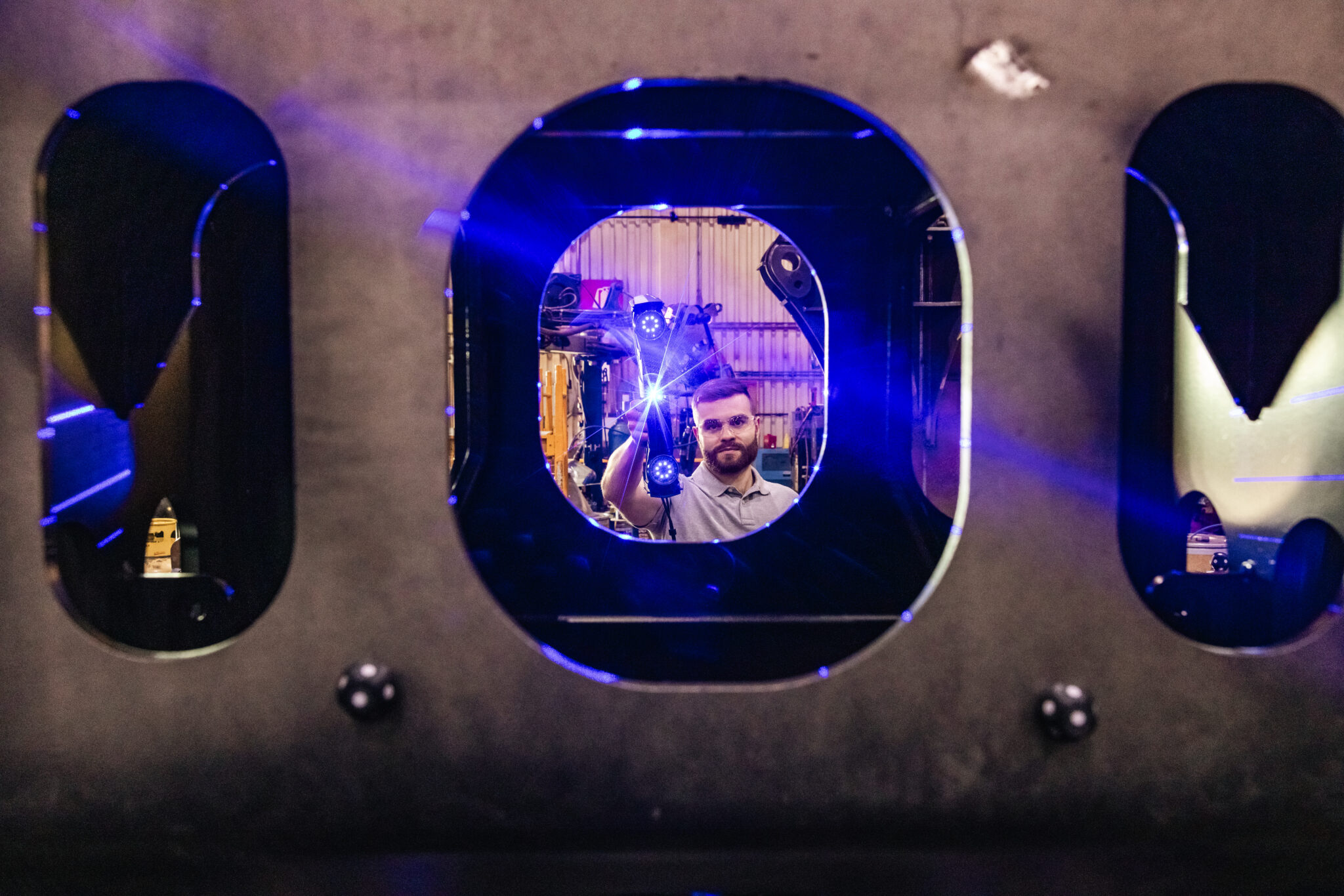
OR3D is a UK-based 3D measurement and engineering services provider, specialising in high-accuracy data capture, reverse engineering, inspection and the development of bespoke engineering solutions for complex projects. With its origins in precision metrology, OR3D has built a strong reputation as a problem-solver for intricate measurement challenges across aerospace, energy, transport, civil infrastructure and heritage conservation.
The company delivers end-to-end services, from on-site 3D scanning and digital modelling to CAD conversion and technical consultancy, tailored to each client’s specific requirements.
Equipped with advanced technologies, including metrology-grade handheld scanners, industrial CT systems, drones, and terrestrial laser scanners, OR3D operates at the critical intersection of accuracy, adaptability and engineering insight.
Background and objectives
A newly constructed large steel bridge was found to have manufacturing defects in several of the welds connecting its structural I-beams. These findings resulted in a temporary weight restriction being imposed until appropriate reinforcement could be completed.
To support the repair process, OR3D was instructed to 3D scan the affected areas. The engineering solution involved installing custom-fabricated splice plates around each defective weld zone. These plates needed to fit closely against the curved geometry of the steel beams, reinforcing the structure without introducing additional stress. Each splice consisted of two precision-machined components, one fitted to either side of the beam, requiring exact alignment and symmetry across variable, non-uniform surfaces.
Key objectives included:
- Accurate 3D scanning of over 15 weld zones along the bridge’s steel I-beams, each approximately 2.5 m in length and 2 m in height
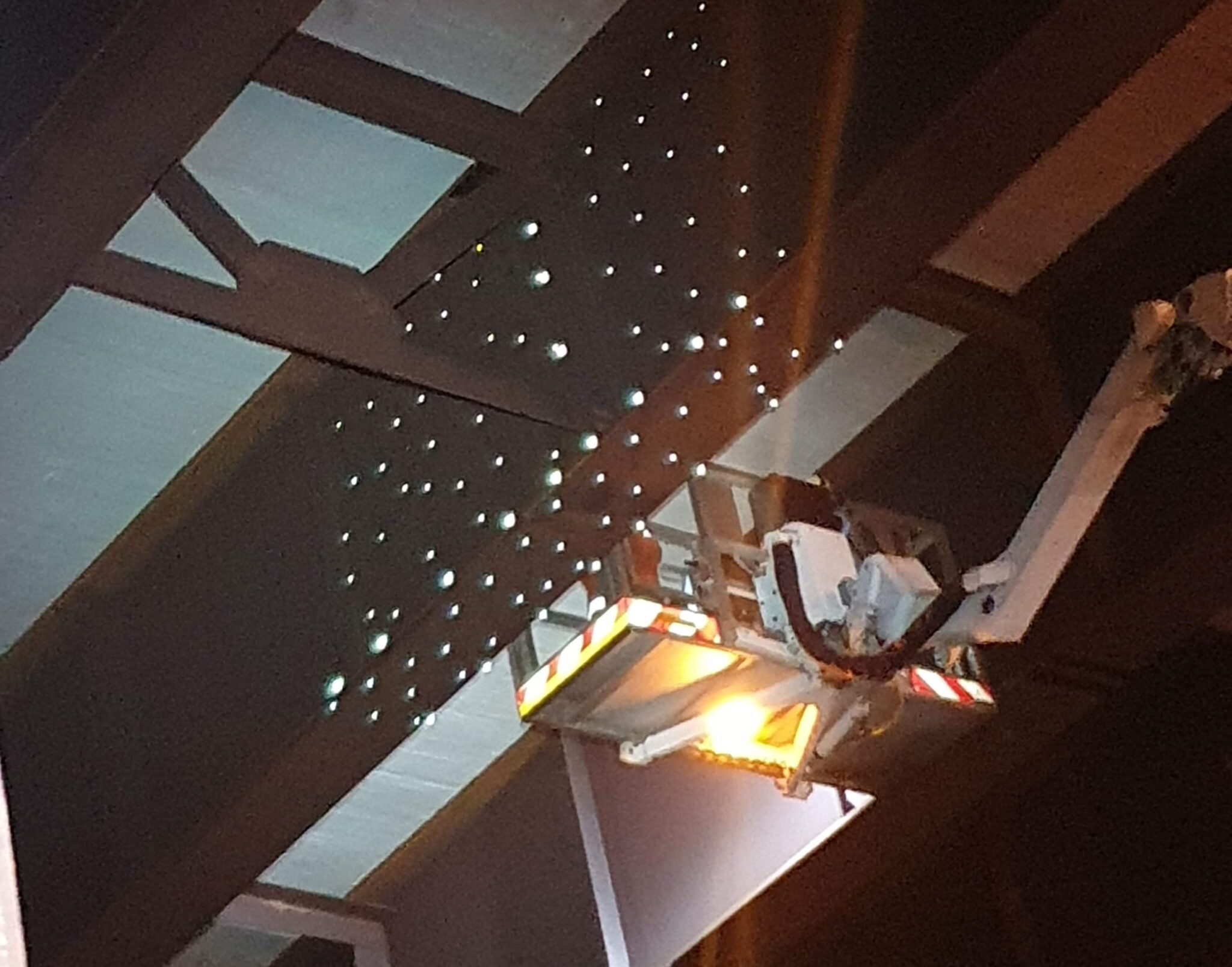
- Night-time operations during planned road closures, using mobile elevated work platforms (MEWPs) in place of fixed scaffolding
- Reverse-engineered CAD models of splice plates, aligned with the bridge’s existing geometry and suitable for direct machining
- Tight fitment tolerances across curved, non-uniform surfaces to ensure that bolted splice plates would apply no added stress to the welds.
Bridge design and technical challenges
The bridge structure was made of very large steel I-beams with 2 m tall webs, 500 mm wide flanges and 60 mm thick steel sections. The faulty welds, which were all longitudinal joints between these beams, varied in location, sometimes on the bottom flange, sometimes on the web and occasionally on the top flange.
Since these welds were distributed along the entire bridge length, each defect had to be evaluated and scanned individually.
In previous projects, OR3D had used arm-based portable CMMs for similar inspection and reverse engineering tasks. However, deploying bulky measurement arms 20 m above the ground, on narrow steel beams and unstable mobile bases, proved risky and inefficient. While the workflow had produced usable results in the past, the team identified the need for a more agile and precise solution.
The solution: HandySCAN MAX Elite
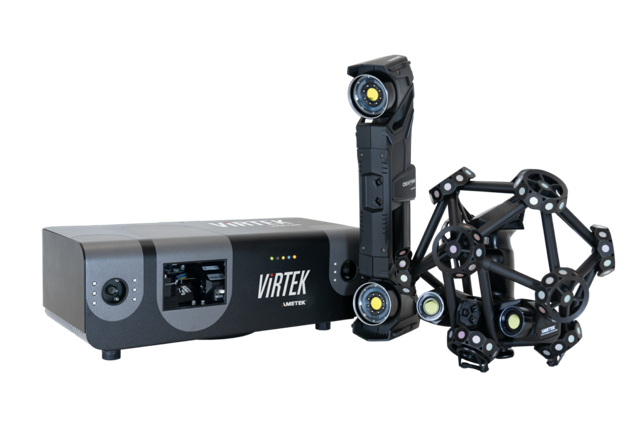
Partnering with Measurement Solutions Ltd (MSL), OR3D selected the HandySCAN MAX Elite from Creaform, a metrology-grade handheld 3D scanner, ideal for capturing high-precision data in challenging site conditions.
The scanner’s portability, accuracy and adaptability made it particularly well suited for working from mobile elevated work platforms (MEWPs) during night-time road closures, where time and access were highly restricted.
The HandySCAN MAX Elite offered several key advantages for this project:
- Lightweight and handheld: easy to operate at height without the need for fixed scanning infrastructure or scaffolding
- High accuracy on large parts: capable of capturing complex steel geometries with the precision required for manufacturing tight-tolerance splice plates
- Fast deployment: reduced set-up time allowed OR3D to maximise productivity during short access windows.
This combination of precision and flexibility enabled OR3D to capture complete 3D data sets across all critical weld zones, supporting the design of bespoke reinforcement components without needing repeat site visits.
HandySCAN MAX Elite
Combining the effect of portability, accuracy, speed and simplicity, which are inherent to the HandySCAN 3D line-up, the HandySCAN 3D|MAX Series is optimised to acquire accurate 3D measurements on large and complex parts typically present in the aerospace, transportation, energy, mining and heavy industries.
Engineered to capture fine details and scan large volumes equally well, the HandySCAN 3D|MAX Series enables professionals to measure large parts and assemblies in a simpler scanning process, resulting in high-quality 3D scans in just a matter of minutes.
Onsite execution
Each defective weld area spanned roughly 2.5 m. Scanning one zone typically took around 90 minutes, including set up, scale bar placement and full-surface acquisition from both sides of the I-beam. The team captured entire webs from top to bottom, including the top and bottom flanges, bowed or distorted regions near welds and adjacent surfaces to aid alignment and context.
Reverse engineering with Geomagic Design X
The scan data was imported into Geomagic Design X and aligned with the bridge’s CAD co-ordinate system. Plate models were trimmed and reshaped to conform exactly to the scanned surfaces. Bolt holes were positioned with millimetric precision, ensuring correct alignment across both sides of the I-beam. The final models were exported as mechanical CAD files, which the client sent directly to a machine shop for manufacture.
Project impact and benefits
The scan-derived plate models matched the bridge’s complex surfaces with exceptional fidelity, reinforcing structural integrity without increasing local stresses. OR3D’s team was able to scan complex areas quickly, even under awkward, high-risk conditions, and the reusable data has already proven useful for follow-up work.
This workflow is now established as a go-to method for similar infrastructure challenges. Beyond bridges, it’s well-suited to civil structures, hydropower components, bridge bearing inspection and heritage conservation. The HandySCAN MAX Elite proved itself as a reliable, high-performance scanner, now central to OR3D’s service offering.
The results
Using the HandySCAN MAX Elite, OR3D successfully scanned and reverse-engineered over 15 complex weld zones across the bridge structure. The high-resolution data captured by the scanner enabled the creation of fully manufacturable CAD models that accurately matched the existing geometry of the corroded or deformed areas.
The resulting plate designs were precisely contoured and machined to fit without requiring on-site adjustment, ensuring stress-free installation and eliminating the risk of introducing new structural tension.
This streamlined workflow not only met the rigorous accuracy requirements of the contractor and client, but also significantly reduced turnaround time compared to traditional measurement methods. With the process now validated in a real-world environment, it is set to become a repeatable solution for future structural reinforcement projects as additional weld defects are identified
The final outcome
This bridge reinforcement project marked OR3D’s first major deployment of the HandySCAN MAX Elite, and it exceeded expectations. The combination of agile scanning, high accuracy and seamless CAD integration allowed OR3D to provide a critical service in a complex, high-stakes infrastructure scenario.
As OR3D continues to grow its footprint in civil engineering and transport, investments in flexible, next-gen scanning solutions like the HandySCAN MAX Elite ensure it remains at the forefront of structural integrity, safety and innovation.
Says Robert Wells, Service Manager at OR3D:“The workflow worked really well, and the HandySCAN MAX was a perfect fit for this type of project. We were able to scan complex areas quickly and with the accuracy needed, without scaffolding or a stable platform. It’s bridged a crucial gap in our capability and opens the door for many similar civil and infrastructure applications.”
Want to know more about this article?
Ask us below...