How MSL enables faster, smarter and more confident engineering across automotive and motorsport

6 Mins
Published in 3D Scanning
The automotive and motorsport industries are undergoing a profound shift. Vehicle architectures are evolving, electrification is accelerating, materials are becoming increasingly advanced, regulatory pressures are intensifying, and the market demands shorter development cycles without compromising performance or quality. At the centre of this transformation lies a capability that underpins everything else: digital precision.
From elite motorsport organisations and hypercar engineering teams to OEM suppliers, styling innovators and specialist performance manufacturers, an increasing number of UK companies are asking Measurement Solutions Ltd (MSL) to build digital workflows that give them the accuracy, confidence and speed required to stay competitive.
Motorsport: Designing at the limits with absolute dimensional confidence
Few environments push engineering tools harder than high-level motorsport. Aerodynamic surfaces, hybrid powertrains, complex chassis geometries and tight packaging constraints mean accuracy isn’t just beneficial, it’s a competitive advantage.
At M-Sport, one of the most respected names in global rallying, 3D scanning plays a pivotal role in body design, aero development and FIA compliance.
Precision for FIA-regulated geometry
In modern WRC competition, the FIA performs full-vehicle 3D scanning during homologation. That means teams must ensure their own scanning workflows are equally robust, not only to guarantee compliance, but to design as close to the regulatory boundaries as possible.
By incorporating advanced scanning into their process, M-Sport can:
- Validate bodyshell geometry against FIA space envelopes
- Push aerodynamic surfaces to within millimetres of FIA limits
- Reduce tolerances across welded structures and composite components
- Check exterior and interior surfaces, including the underbody
- Verify compliance before presenting the vehicle for official inspection.
This combination of confidence and precision enables M-Sport to extract maximum performance while avoiding penalties or late-stage redesigns.
A tool for rapid iteration
Motorsport development evolves rapidly, often weekly. 3D scanning supports this by enabling:
- Fast updates to aero packages
- Accurate inspection of new composite tooling
- Validation of crash and safety structures
- Digital comparison between prototype and production components.
When speed is everything, scanning allows engineering teams to react quickly, iterate aggressively and make decisions with complete geometric clarity.
Hypercar engineering: The digital foundations of a complete vehicle redesign
At the highest levels of performance engineering, entire vehicles are reimagined from the ground up. RML Group’s work developing a 900bhp Porsche-based hypercar is a powerful example of how digital precision supports every phase of an ambitious programme.
Full-vehicle scanning as the foundation
Engineers begin by scanning the donor vehicle, interior, exterior, structural and mechanical systems to create a complete digital baseline. This becomes the project’s ultimate reference throughout development.
Engineering with complete geometric clarity
With full-body scan data available, RML engineers could:
- Redesign suspension geometry and mounting points
- Modify track width and uprights
- Package a significantly uprated powertrain
- Develop carbon-fibre replacement bodywork
- Validate cooling, airflow and performance systems
- Integrate scan data with CFD and FEA simulations
- Inspect pre-production builds before track testing.
Here, scanning wasn’t a single step; it informed almost every engineering decision.
A radically faster development cycle
Accurate scan data removed ambiguity, prevented costly redesigns and allowed RML to engineer with confidence from day one, dramatically accelerating the overall programme timeline.
Composites and OEM supply: Lightweighting with dimensional accuracy
Lightweighting remains a core priority for OEMs and tier-one suppliers. As vehicles become lighter, more aerodynamic and more sustainable, precision becomes critical, particularly in composite structures.
Linecross, one of the UK’s leading thermoplastic and composite manufacturers, uses 3D scanning to validate tooling, assess forming quality and deliver components that meet increasingly demanding OEM tolerances.
Tighter tolerances = lighter parts
By ensuring consistent dimensional quality, Linecross can:
- Reduce excess material
- Minimise overbuild
- Validate tooling in fewer cycles
- Maintain accuracy during ramp-up
- Quickly troubleshoot forming distortions.
The MetraSCAN’s ability to capture glossy and dark composite surfaces makes it especially effective in this environment.
Shorter development timelines
High-speed scanning significantly reduces the time required to capture data, enabling faster optimisation cycles, a major advantage in fast-moving OEM programmes.
Aftermarket styling and performance: From scan → CAD → print → mould
The styling and aftermarket performance sector is one of the most creative and fast-moving in automotive. Companies such as TRC (TripleRComposites) rely on digital workflows to accelerate product development and guarantee perfect fitment.
Reverse engineering around true vehicle geometry
Instead of hand-templating, slow and imprecise, TRC captures full-vehicle scan data. That data is then:
- Imported into CAD
- Used to design styling and aero components
- Precisely aligned to true vehicle geometry
- Optimised into production-ready parts.
A seamless digital workflow
TRC now operates a full digital loop:
Scan → CAD → 3D print → mould → final product
This delivers:
- More accurate, better-fitting components
- Improved panel alignment
- Fewer physical prototypes
- Faster time-to-market
- Consistent manufacturing outcomes.
Digital precision supports creativity rather than limiting it.
Specialist performance engineering and heritage remanufacturing
Not all engineering challenges revolve around new vehicles. Many involve legacy components, motorsport systems or heritage vehicles where no CAD data exists.
NS85 Engineering is a stand-out example of how modern scanning enables organisations to engineer confidently in these scenarios.
Engineering without drawings
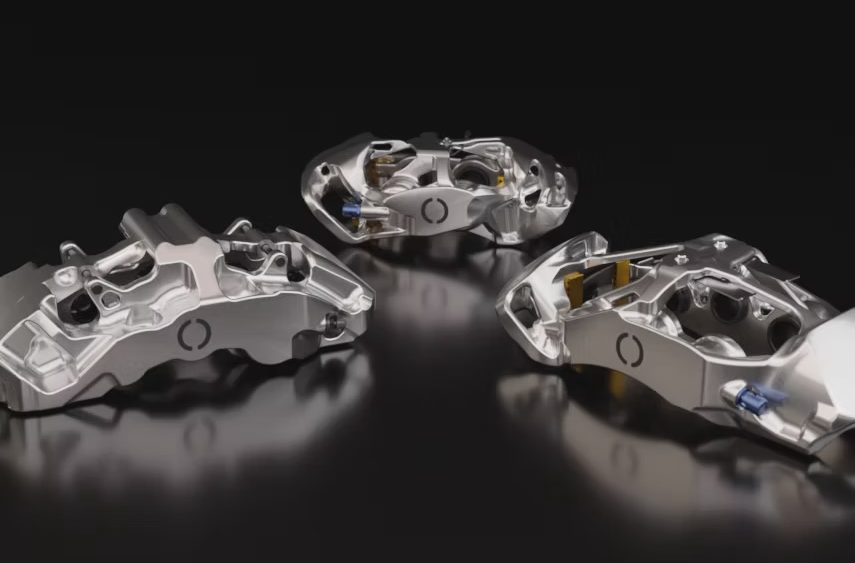
NS85 frequently workson high-performance braking systems, bespoke machined components and heritage parts where only the physical component exists. Scanning allows it to:
- Capture complex internal and external geometry
- Generate watertight mesh files for CAD modelling
- Recreate parts with “better-than-original” precision
- Support billet machining and additive manufacturing
- Validate redesigned components before production.
Supporting optimisation and redesign
Scanning also enables engineers to go beyond replication. NS85 can strengthen structures, optimise shape, or redesign components while maintaining original fit and function.
The HandySCAN EVO: The next evolution of automotive and motorsport metrology
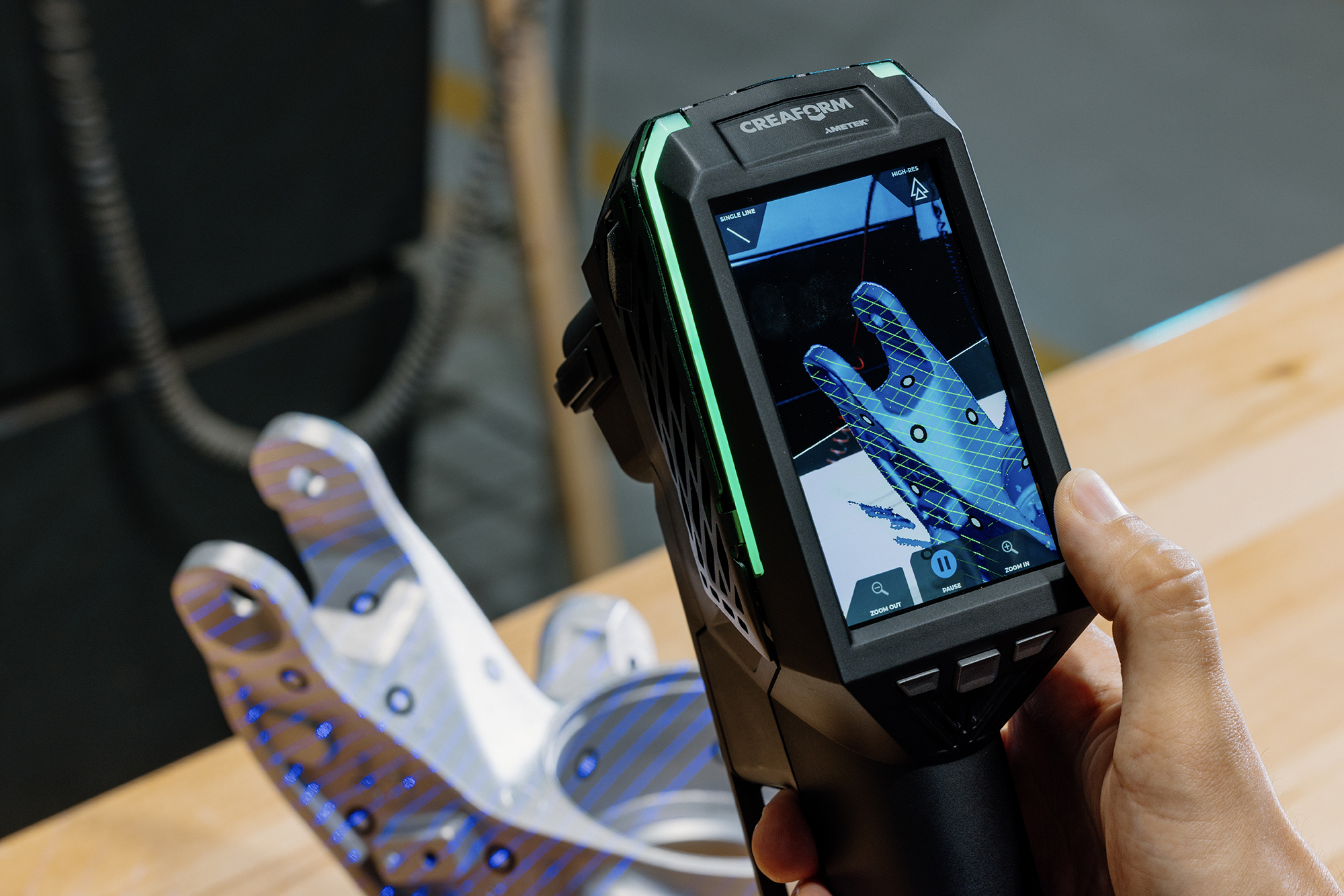
As automotive and motorsport engineering become more digital and more time-sensitive, the demands on metrology increase. The Creaform HandySCAN EVO, now part of MSL’s portfolio, represents a major leap forward.
Higher accuracy for modern engineering
Ideal for capturing:
- Carbon-fibre bodywork
- Aero components
- Suspension pickups
- Engine bay packaging
- Precision-machined parts
- Composite panels
- Interior surfaces.
Its increased accuracy supports the tighter tolerances required across motorsport, hypercar engineering, EV platforms and advanced OEM supply.
Faster scanning for faster decisions
The EVO’s improved speed reduces workshop downtime, trackside measurement time and CAD turnaround times, directly supporting fast-moving engineering environments.
Better performance on challenging surfaces
The EVO excels with:
- Gloss carbon
- Dark polymers
- Machined metals
- Painted finishes
- Mixed-material assemblies.
Often with minimal surface preparation.
Fully integrated with digital workflows
With seamless compatibility across VXelements, CAD and simulation platforms, the EVO supports modern engineering workflows end-to-end, from scan to model to validation to manufacture.
The digital advantage: How MSL is reshaping automotive and motorsport engineering
Across every discipline, from FIA-regulated rally cars to digitally engineered hypercars, from OEM composite programmes to aftermarket styling, from heritage braking systems to full-vehicle reverse engineering, one trend unites the sector:
Digital precision enables better engineering.
MSL supports this shift by providing:
- Industry-leading scanning and inspection systems
- Deep workflow and application expertise
- Integration services tailored to automotive environments
- Motorsport-specific training
- Long-term UK-based technical support
- Reverse-engineering and inspection services.
This enables our customers to:
- Reduce development risk
- Shorten programme timelines
- Improve accuracy and performance
- Eliminate manual measurement errors
- Innovate with confidence
- Build scalable digital workflows.
Conclusion: Precision is no longer optional; it’s foundational
The future of automotive and motorsport engineering belongs to teams that can measure, model, validate and iterate with speed and certainty. From M-Sport’s FIA-compliant rally cars to RML’s digitally engineered hypercars, from Linecross’s composite components to TRC’s styling innovation and NS85’s precision heritage engineering, digital accuracy is redefining what is possible.
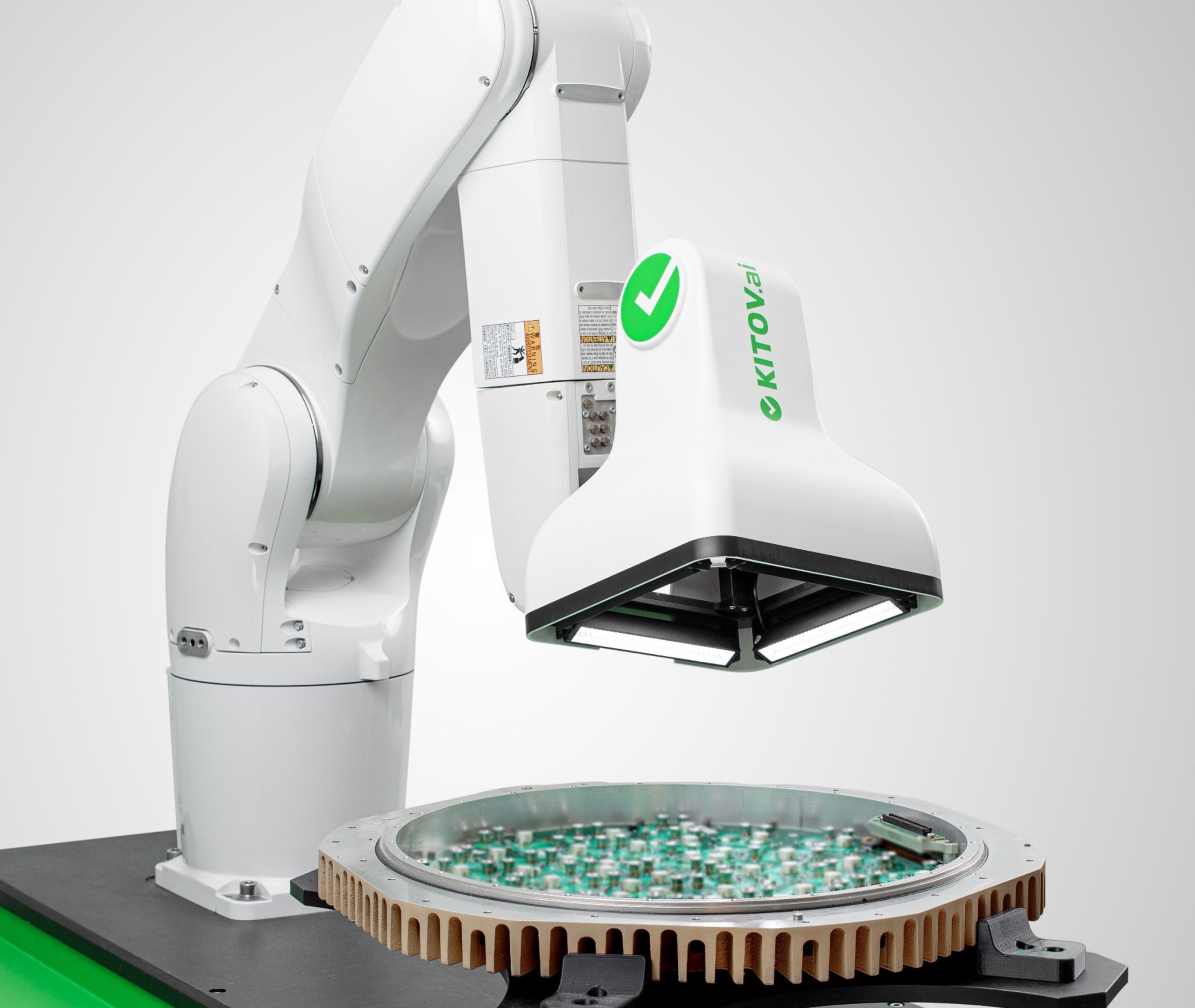
With cutting-edge tools like the HandySCAN EVO, MetraSCAN 3D and automated CUBE-R solutions – and with MSL as the integration partner – UK automotive and motorsport organisations are building the next generation of engineering capability.
Want to know more about this article?
Ask us below...