MAESTRO: Mastering the art of CMM performance

3 Mins
Published in Interviews and Opinions
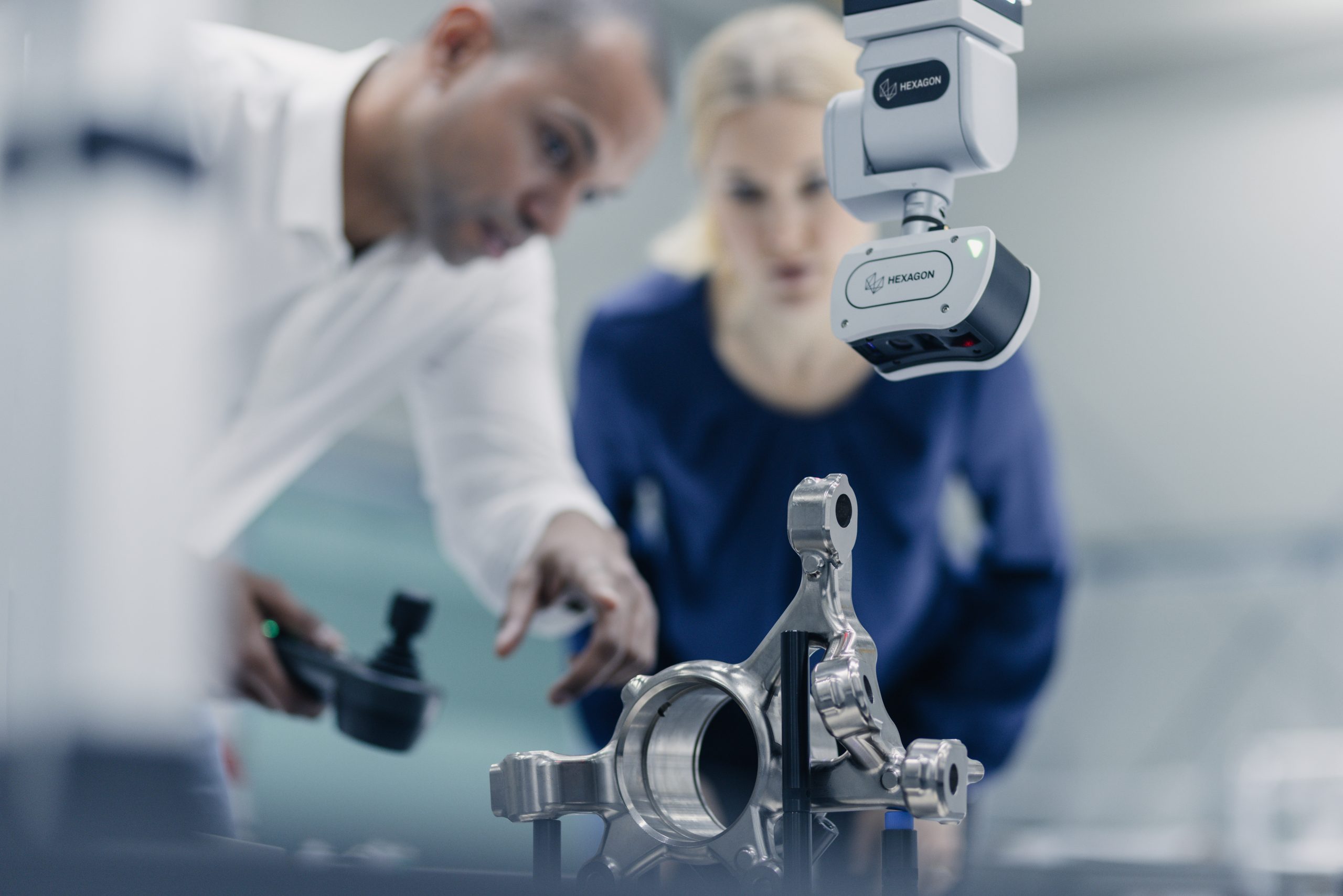
In a continuously evolving economic landscape, manufacturers must stay laser-focused on efficiency, throughput and cost reduction. And while challenges remain, the digital revolution delivers a golden opportunity to reshape industry conventions through the convergence of technology, hyper-connectivity and data analytics. It seems the perfect time to reimagine a manufacturing mainstay: the coordinate measuring machine.
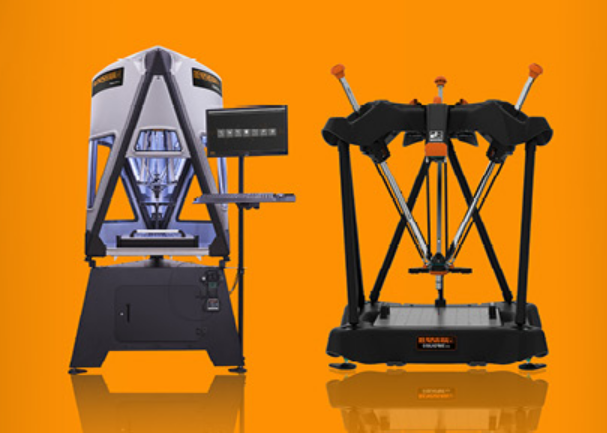
Manuel Müller, Senior Product Marketing Manager for Stationary Machine Tool Measurement at Hexagon’s Manufacturing Intelligence division, says: “Here at Hexagon we’ve been developing CMMs for decades, with each iteration a little better than the last. But this time we took a different approach. We thought about what we’d conceptualise if CMMs didn’t exist and this was our chance to design a coordinate measuring solution from the ground up with little consideration for the limitations of existing technology. The result of that process was MAESTRO, a CMM that overcomes what our customers state are their four biggest pain points: throughput, skill gaps, connectivity and future-proofing/scalability.”
The need for speed
It’s well documented that CMMs can sometimes prove the bottleneck in manufacturing processes.
“With MAESTRO, we sought to change all that, developing a machine that not only offers ultra-fast measuring speed, but accelerates the whole metrology workflow to keep pace with production,” states Manuel.
Hexagon says the new CMM offers the highest speed in its class, with traverse up to 6,500mm/s and measurement up to 1,100mm/s. However, this machine is about far more than axis speeds. It has the ability to move all five axes simultaneously during positional movement, while a 360° B axis allows infinite rotation and software selects the shortest rotational movement to the next sensor position.
Despite the higher speeds, the machine offers the same accuracy as Hexagon’s existing portfolio of best-selling GLOBAL bridge-type CMMs. Notably, users can alter the speed/accuracy ratio at the push of a button, sacrificing speed in favour of more accuracy and vice versa.

Bridging the gap
Historically, CMMs have proved notoriously difficult to use with only skilled operatives able to achieve the best levels of performance.
“With the skills market currently failing to meet demand, there’s a need for CMM technology that’s suitable for use by everyone, from seasoned quality professionals to non-metrologists,” explains Manuel.
MAESTRO users can simplify every part of the measurement workflow using the intuitive software and hardware ecosystem. For instance, Metrology Mentor software automates programming to deliver rapid, reliable and repeatable collision-free CMM programs in a few clicks without any need for coding. Users can also take advantage of Metrology Reporting software to share real-time information and insights, while Metrology Asset Manager tracks equipment use and identifies bottlenecks and spare capacity.
“Crucially, the all-digital, self-aware MAESTRO CMM system offers instant synchronisation to a digital twin, for reduced risk of collisions and faster set-up times,” he explains. “Digital machine components [such as sensors and racks] are instantly identified and initialised when mounted and synchronised with the digital twin. In addition, integration with industrial automation has never been simpler.”
The machine also connects to Hexagon’s entire cloud-based Nexus ecosystem for the delivery of measurement data to smart manufacturing environments.
Making connections
Hexagon’s all-digital, connected CMM system facilitates data-driven decisions that boost productivity and quality. It features newly-developed digital architecture, incorporating digital sensors, a single cable system, and a completely new controller and firmware.
“MAESTRO is an industrial IoT device by design, so it provides data that includes important controller and wrist information, machine status, remaining measurement time, sensor configuration, calibration data, and more. The digital system also enables remote access in service and support cases. This takes advantage of a live feed to the machine through a built-in camera.”
Bright future
Customers told Hexagon they wanted a CMM with a high degree of future-proofing and scalability.
“With this in mind, we made sure MAESTRO can evolve via easy upgrades in the field, even years after initial set-up,” says Manuel. “We’ll design any sensors we release in the coming years to perform on existing and future MAESTRO machines.”
As a point of note, the recent Hexagon Live Global 2025 event in Las Vegas, saw the company launch its Autonomous Metrology Suite. The suite enables, among other machines, Hexagon’s existing GLOBAL S, TIGO SF and new MAESTRO CMMs to join the same digital workflow, meaning existing investments continue to pay dividends.
Potential applications for MAESTRO are wide ranging. They include GD&T-compliant parts such as gearbox housings, precision components with freeform surface components (like turbine blades), and moulds and moulded parts with functional geometries.
With its planning, programming, set-up/execution and analysis/reporting attributes, MAESTRO clearly has the potential to become an integral component of the smart manufacturing era.
Want to know more about this article?
Ask us below...