Measuring between the lines, by Dr Neil Calder

2 Mins
Published in Interviews and Opinions
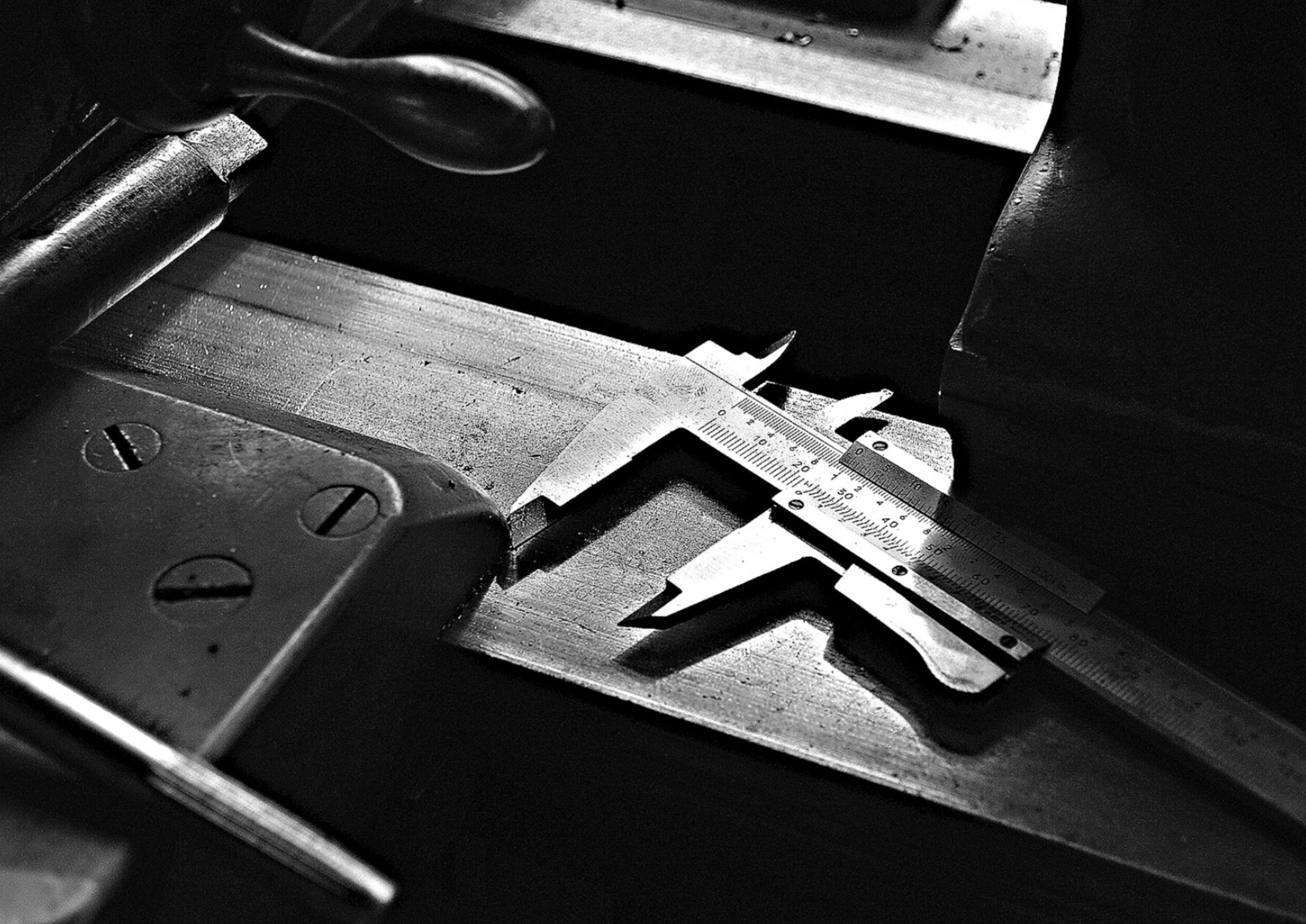
In this article I would like to dig into the foundations of measurement for manufacturing and look back at where this current capability has come from. It’s always important not to forget our engineering heritage, and to recognise the shoulders of which giants we stand on.
Early science lessons in school are centred around measuring things and provide the first real confluence of numbers with the world around us. I recall measuring the dimensions of our primary school playground with a rudimentary metre stick and being disappointed (or even affronted) at the relative inaccuracy of this. Later, as a practicing researcher in manufacturing engineering it was more normal to have a Vernier calliper or a micrometer within arms reach and I have become comfortable with that.
These are still tools which are found in the workbench drawers of even the most advanced shop floor that I visit, despite the former dating from around the 1820s and having existed almost unchanged in its analogue form for the past 200 years. The neat trick that Pierre Vernier developed a couple of centuries before that to increase measurement accuracy of graduated scales by an order of magnitude by concentrating on minute but discernible differences is paralleled to some degree in the optical interferometry techniques which powers accurate laser measurement today.
I had the occasion to attend an evening business function at the Musee des Artes et Metier in Paris a few years ago which included an after-hours tour through the museum’s artefacts. What impressed me then, more than the canapes and champagne, was the priority in 17th and 18th century France that was afforded to measurement machines and standards, which explains the impetus which Vernier had. This wasn’t just for scientific curiosities, but was baked into the very social fabric of the nation. There remains to this day two of an original 16 public marble metre standards from the time of the French revolution, embedded in the walls of a couple of otherwise innocuous buildings in the centre of Paris.
Joseph Whitworth was the darling of later Victorian industrialisation on the manufacturing shop floor, although with more direct impact on the toolroom than in the factory sweatshops and dark satanic mills of the period. He can be justifiably anointed the father of the “thou” by enabling a practical methodology of measurement for going beyond the traditional halving fractions of 1/32, 1/64, etc of an inch and later in the century managed to create a machine capable of measuring to a millionth of an inch within a single linear dimension. This was basically a micrometer the size of a lathe.
In 1841 Whitworth was the first to establish a national thread standard which bears his name. Prior to this there were local standards within companies or pockets of industrial sectors but little which would lead to widespread interchangeability.
His experience with threads led to the development of the highly accurate hexagonally rifled musket which is reputed to have allowed a Confederate sharpshooter to kill union General John Sedgwick from a range of over 1000 yards, just after he had famously proclaimed “they couldn’t hit an elephant at this distance”.
Both Vernier and Whitworth were able to squeeze more accuracy out of contemporary measurement systems than their peers. I can’t help wondering what use they could make of modern measurement tools.
Want to know more about this article?
Ask us below...