Optical metrology: What are the advantages?

2 Mins
Published in Optical Metrology
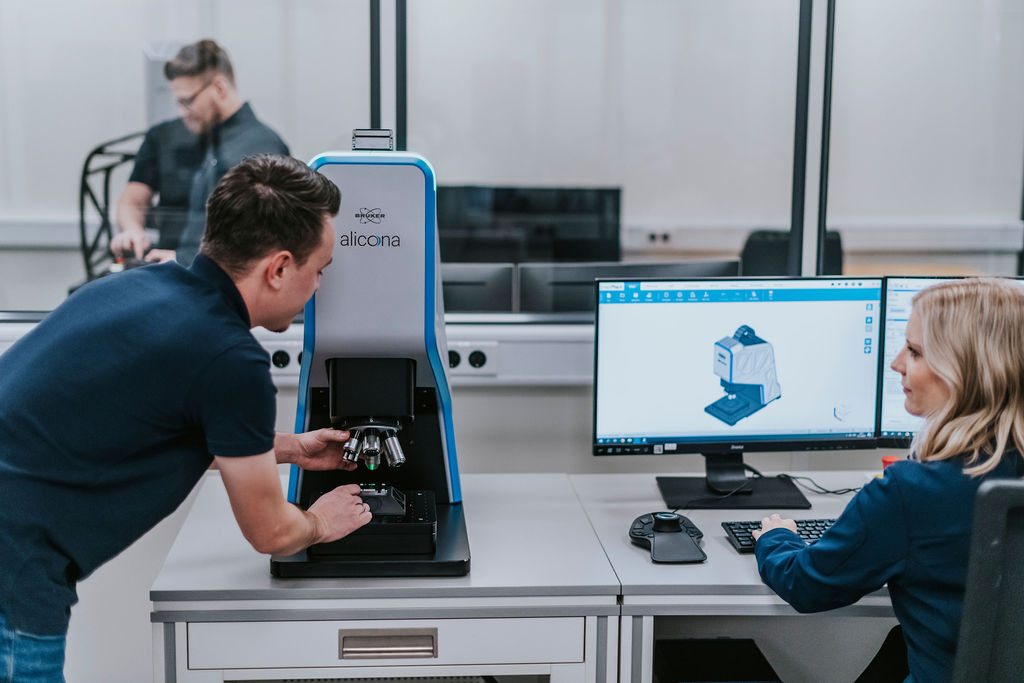
Optical Metrology systems have advanced significantly in the past 20 years. At the start they were susceptible to surface reflectivity issues, sensitive to ambient light conditions, lower in accuracy, and sometimes with higher initial cost. Today, however, optical metrology offers several advantages over tactile metrology, which involves the use of physical contact probes to measure object geometry. According to Optimax Imaging and Inspection, exclusive UK and Ireland partner for Bruker Alicona optical metrology products, these advantages are especially pronounced in modern manufacturing and quality control processes where such systems can be integrated into production.
There are different types of optical metrology using lasers, structured light or cameras, but this article refers to systems using focus variation as the operating principle.
As there is no physical contact between the measured object and measurement system, there is no risk of surface damage with optical metrology. This is particularly beneficial for delicate, soft or flexible materials that could be deformed or damaged by tactile probes. This can also be true with hard objects where, for example, a tactile surface measurement system can scratch a surface.
The speed of data acquisition is also much faster, and its measurement point density is far denser: these systems can capture millions of data points in seconds, which would be impossible with a tactile probe that can only capture one measurement point per touch. This capability leads to the additional advantages of high accuracy and high throughput – particularly useful in production lines where speed and accuracy are important factors.
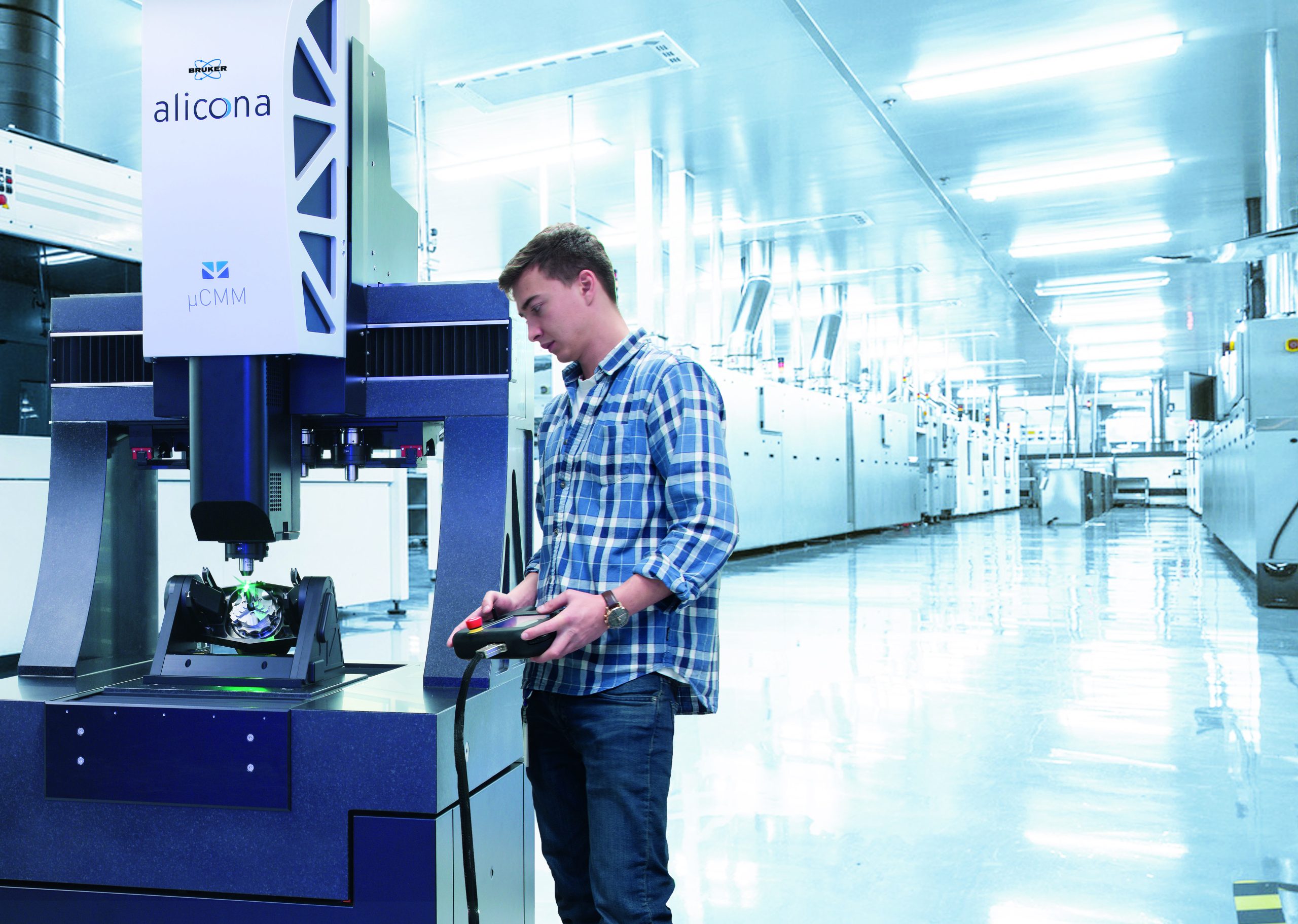
The ability of an optical system to capture a large area in high resolution is also a significant advantage. As it enables a 3D model of an area to be captured, it can easily measure 3D form and freeform surfaces with many millions of data points, up to 500 million in a large area, with a vertical resolution of as low as 20 nm. Clearly, it would be impossible to measure to this level with a single point probe, which are available down to 0.3 mm. Furthermore, the latest versions of instruments can be used for dimensional measurements as a normal CMM with length measuring deviation of E=(0.8+L/600) µm.
The extremely dense data also allows the measurement sensor to be used for line-based and area-based surface finish measurement (roughness). The area-based 3D measurement provides detailed surface characteristics that is related to the whole surface rather than a small narrow line in 2D.
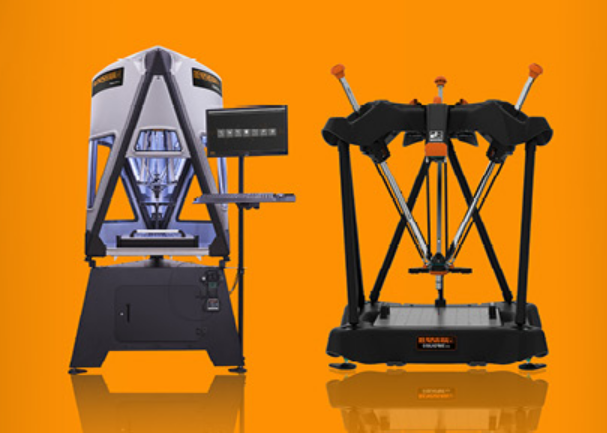
Examples of focus variation products include the Bruker Alicona FocusX and µCMM. The FocusX is a bench-mounted system, while the µCMM is a floor-standing instrument. Both use focus variation as the measurement principle. With software integration these systems provide data processing, analysis and visualisation, offering insights and facilitating automated inspection and quality control processes. They are typically very simple to use and do not require operators with metrology knowledge.
Want to know more about this article?
Ask us below...